
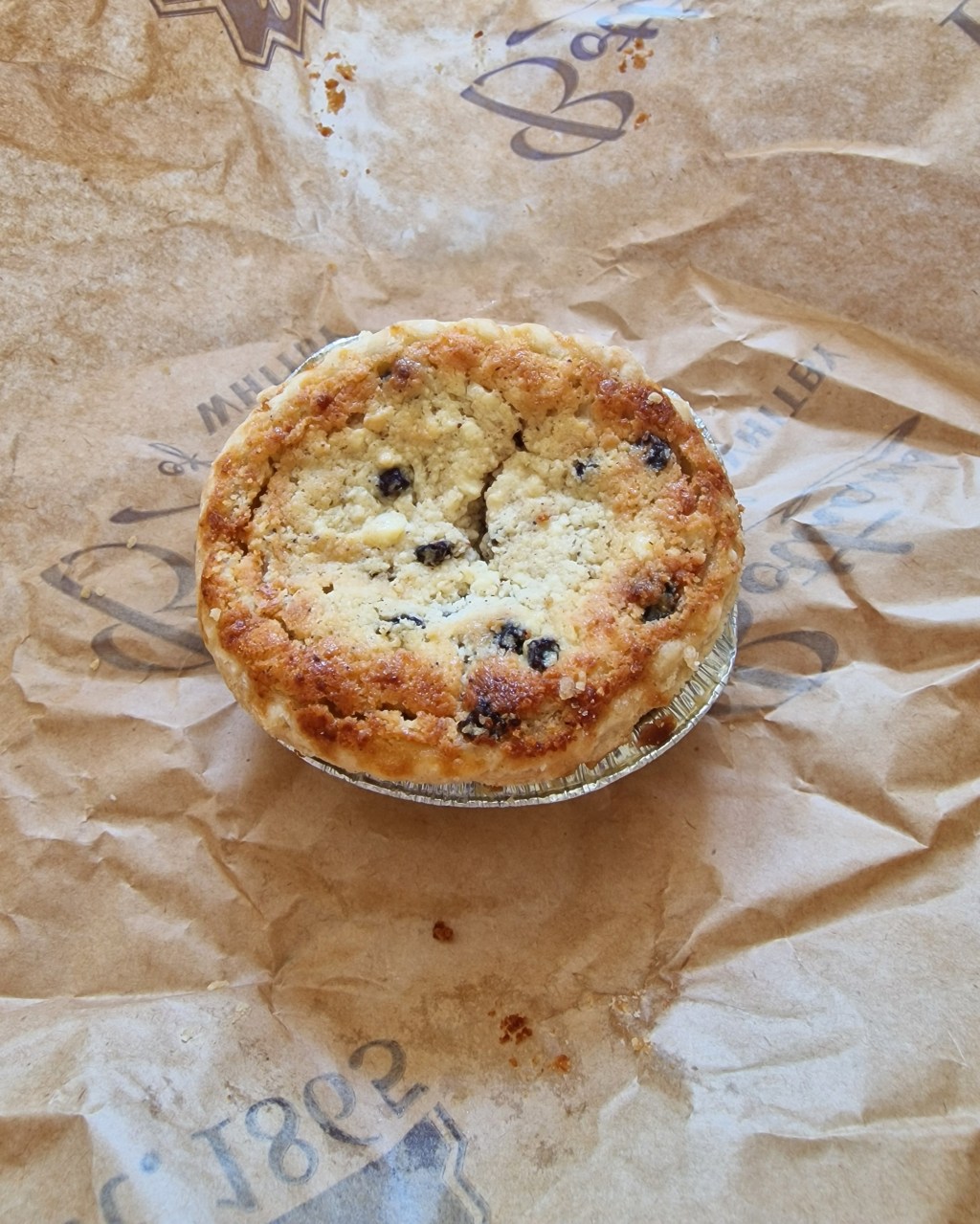
From Botham’s of Whitby
What is a Yorkshire curd tart?
Curd tarts are a speciality of Yorkshire, in northern England.

They were traditionally a way of using up cheese curds, from days when food was scarce enough that you didn’t waste it. It’s basically the Yorkshire version of a cheesecake, dating (according to a quick internet search) to around the 17th century. Curd tarts were traditionally made for Whitsuntide, a church festival held 49 days after Easter (so late May / early June).
The modern curd tart is a sweet shortcrust pastry case, filled with a mixture of cheese curds, spices1, currants2, and eggs. They are very much a regional speciality: before internet shopping was A Thing (and I am old enough to remember those days!), you could only get them by going to Yorkshire or making your own, so it’s been a long time since I’ve had one.
The ones I am trying are from Botham’s of Whitby, using a traditional recipe. These are small, deep-filled tarts, although you can also get bigger, shallower ones to be sliced and shared.
Taste test
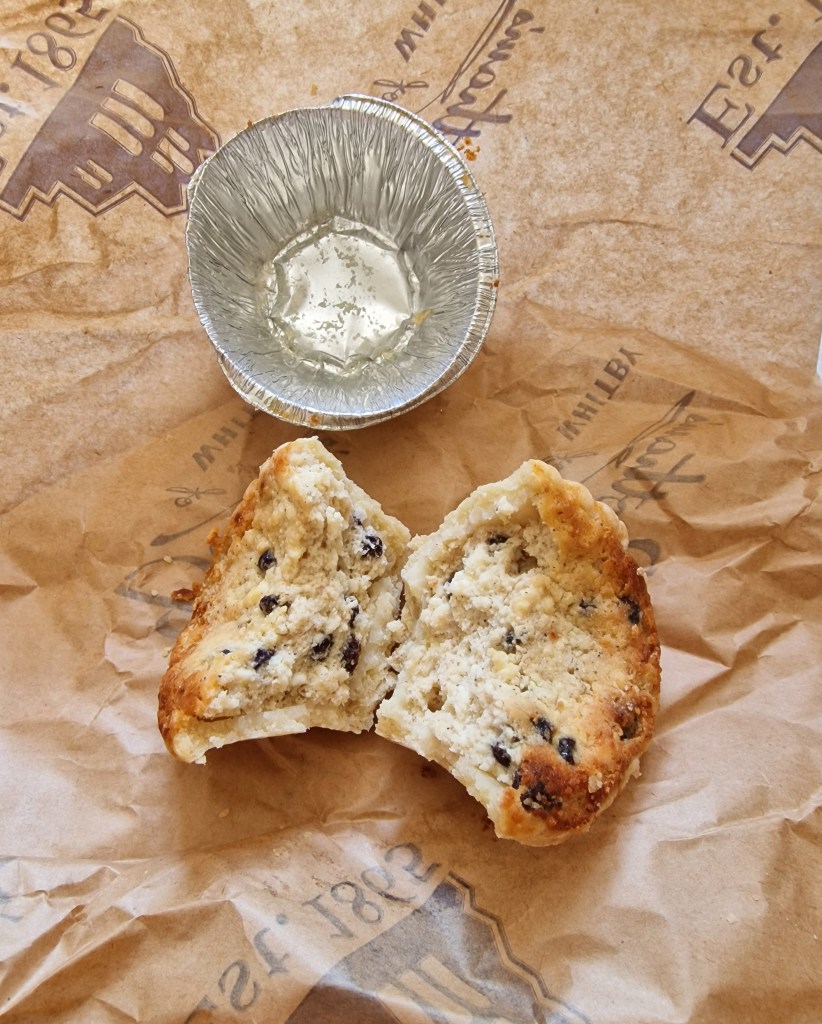
These curd tarts are dense and heavy for their size. The pastry is sweet and not too crumbly: as you can see, the tart split in half nicely to have its portrait taken!
The filling is denser than a cheese cake, slightly chewy – the curds are tiny, and vaguely reminiscent of the texture of dried coconut strands – and slightly grainy: the nearest comparison I have been able to come up with is a firmer version of Wensleydale cheese, which isn’t entirely surprising as they come from the same area.
The taste is initially sweet, with just the slightest hint of sourness, and a delicate note of fragrant spice (nutmeg, in this case). The currants are firmer than their larger raisin currants, with an intense fruity sweetness, and there are plenty of them (bearing in mind they are a flavouring to the filling, not a filling in their own right).
Curd tarts don’t have a big flavour, not like a modern chocolate cheesecake, but they are delicious, and dangerously moreish. There is currently one left in the box, which I am going to have to move when our groceries arrive shortly, and I think I know exactly what’s going to happen to it3.
Definitely one to try if you’re ever in Yorkshire, or happen to find somewhere that delivers them wherever you are.
- Every source I can find insists that one particular spice is the only traditional choice. Unfortunately, none of them seem to agree on which spice: some say allspice, some cinnamon or mixed spice, some nutmeg. One source – Paul Hollywood, no less – goes rogue with rose water. I suspect that every village – perhaps every family – had their own recipe, so they’re all equally right (or wrong). ↩︎
- A special type of raisin made from Black Corinth grapes. They were originally known as raisins de Corinthe (grapes of Corinth), which became ‘currants’ by the 17th century. I love a bit of etymology. 🙂 ↩︎
- i.e. I’m going to eat it, obviously, ↩︎


