
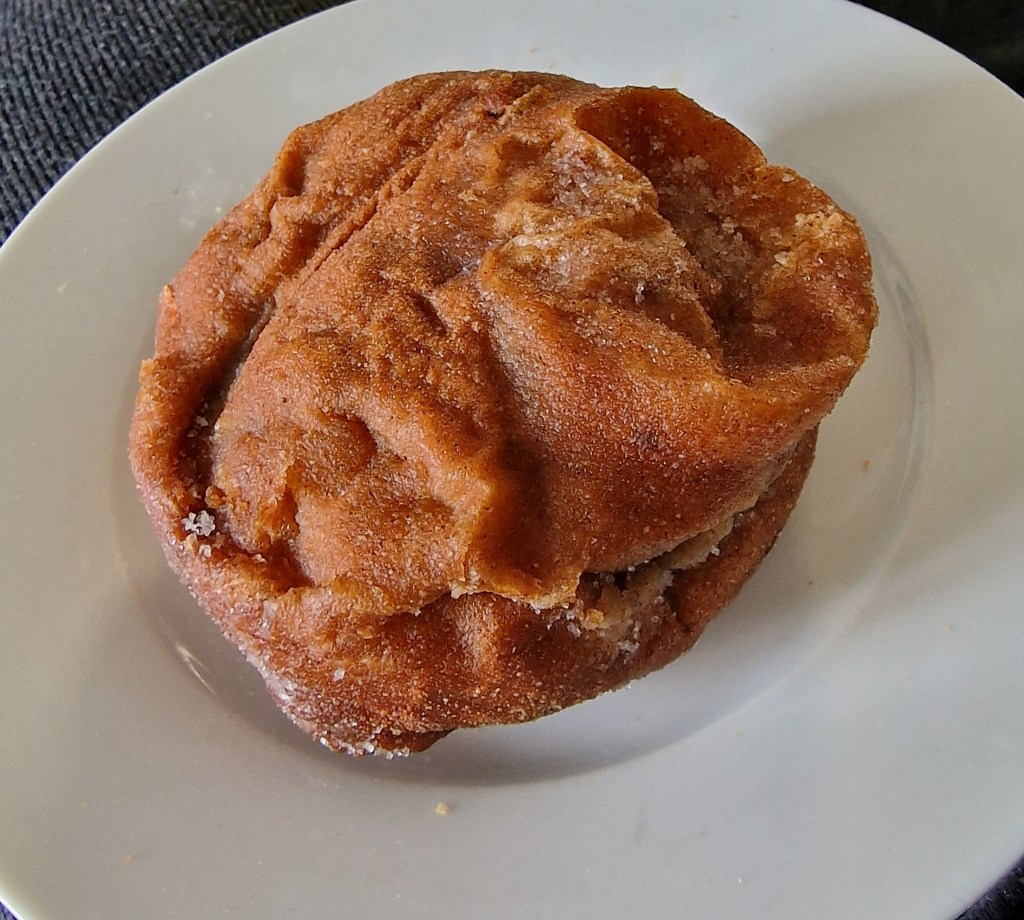
Aka birds nest
Did you know that the Isle of Wight has its own variety of doughnut? Well, it does!
No-one seems to know exactly when they were invented, but the recipe used by Graces Bakery, from where I acquired them, is from 1845. Some online sources state that Isle of Wight doughnuts, also known as ‘birds nests’, were the first British doughnut, but I can’t find any evidence to support this.
Modern, US-style doughnuts (or donuts) are directly descended from Dutch olykoek, but variants of fried dough can be found in most cultures that make dough. (See the Wikipedia entry for more, if you’re interested.)
The outside of the doughnut is slightly crunchy and quite oily, and covered in crunchy sugar and powdered cinnamon. The dough itself is soft and fluffy but rather more bread-like than most modern doughnuts. It has a strongly spiced (but not spicy) flavour with a slightly bitter back-note (from mace, maybe?) that is unusual but not at all unpleasant.
Traditional Isle of Wight doughnuts were filled with dried plums or, like these ones, studded with dried currants. (Which aren’t actually dried currants but a type of raisin: they were historically known as ‘raisins of Corinth’, which evolved into ‘currants’. There’s today’s useless fact-ette for you!)
They are not as sweet as many modern doughnuts, but are really very tasty. If you’re ever on the Isle of Wight and near a branch of Graces Bakery, I can strongly recommend trying one: they’re vegan (an update from the original recipe, which contained lard), and a donation from each one sold goes to charity. You can’t lose, really!

 Is it pineapple sponge today?